The Prince of Egypt

DreamWorks' 1998 animated Exodus, with Val Kilmer as Moses, Ralph Fiennes as Rameses, and a parting of the Red Sea that took three years to animate. Its song "When You Believe" won the Oscar and became a Whitney Houston and Mariah Carey duet.
The Prince of Egypt was the film Jeffrey Katzenberg couldn't make at Disney. While running the studio's films he had kept suggesting an animated version of The Ten Commandments; after he left Disney in August 1994 he co-founded DreamWorks with Steven Spielberg and David Geffen, and when the three met in Spielberg's living room that October, Spielberg told him, "You ought to do The Ten Commandments." Brenda Chapman, Steve Hickner and Simon Wells directed, Stephen Schwartz wrote the songs, and Hans Zimmer composed the score.
The crew of 350 artists from 34 countries came mostly from Disney Feature Animation and Amblimation, Spielberg's closed animation division. They painted about 934 backgrounds by hand. The effects department worked on 1,180 of the film's 1,192 scenes, and the Red Sea parting, a mix of hand-drawn and computer animation, took twelve people three years. Val Kilmer voiced Moses and, on purpose, the voice of God as well. Ralph Fiennes played Rameses, the adoptive brother Moses has to defy. The cast also included Michelle Pfeiffer, Sandra Bullock, Jeff Goldblum, Patrick Stewart, Helen Mirren, and Steve Martin and Martin Short as the court magicians Hotep and Huy. Ofra Haza, playing Moses' birth mother, sang her song "Deliver Us" in English and 17 other languages for the dubbed versions.
The film premiered at UCLA's Royce Hall on December 16, 1998, and opened in second place behind You've Got Mail, a start the industry saw as somewhat disappointing. It held on through the holidays, reaching $101 million in the U.S. and Canada and $218 million worldwide, at the time the most successful animated feature not made by Disney. Roger Ebert called it "one of the best-looking animated films ever made." In January 1999 the Maldives and Malaysia banned it, on the grounds that prophets may not be depicted.
Its longest life has been through a song. Schwartz's "When You Believe," sung in the film by Pfeiffer and Sally Dworsky, was reworked with Babyface into a pop duet for Whitney Houston and Mariah Carey. It peaked at number 15 on the Billboard Hot 100 and went higher across Europe, and on March 21, 1999, it won the Academy Award for Best Original Song, the first Oscar for a DreamWorks Animation film. A direct-to-video prequel, Joseph: King of Dreams, followed in 2000, and a stage musical reached London's West End in 2020.
Similar items
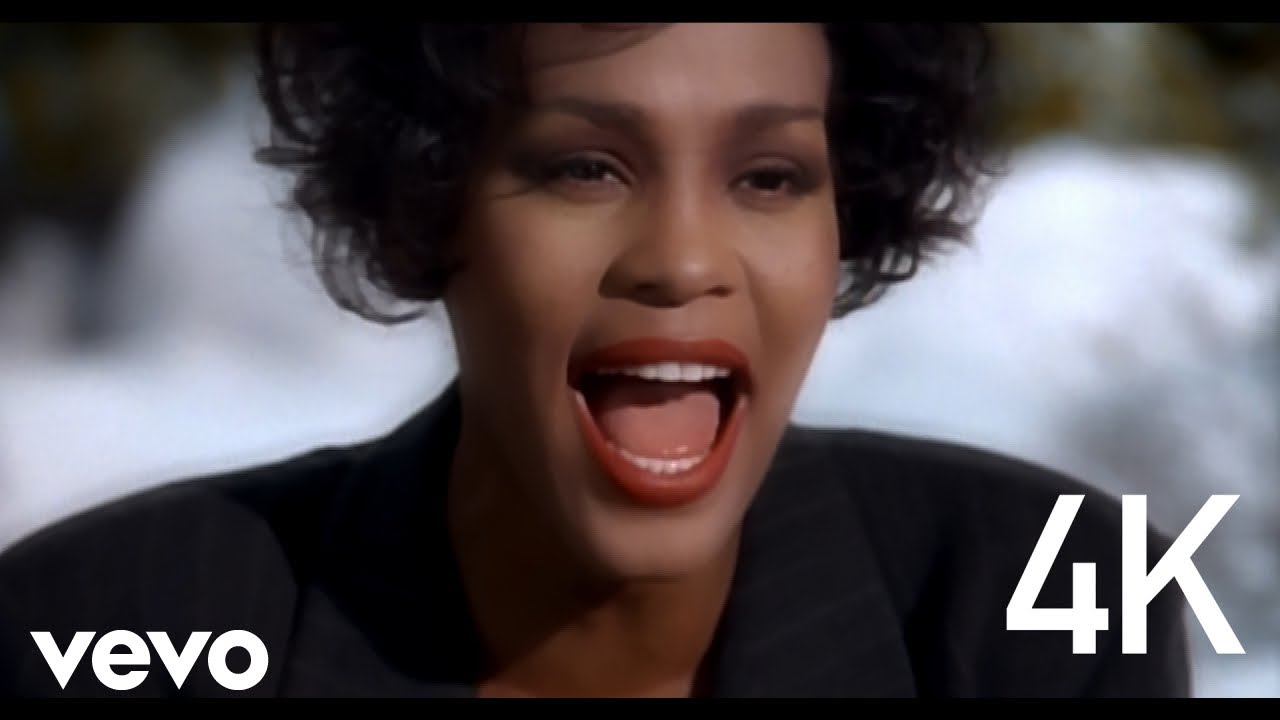
Whitney Houston
The Voice, no qualifier needed. Whitney Houston arrived in 1985 with a record-breaking debut and never slowed down: seven consecutive #1 singles — still unmatched — and, with The Bodyguard, the best-selling soundtrack of all time. For a stretch of the '90s, she simply was the pop ballad.

Mariah Carey
The voice: a five-octave range and that signature whistle register that became the sound of 1990s radio dominance. Columbia executive Tommy Mottola heard her demo tape at a party in December 1988, signed her, and launched a decade-long reign that would see her become the first artist whose first five singles all reached number one, and close the 1990s with fourteen #1 hits and Billboard's Artist of the Decade award.

Anastasia (1997)
Don Bluth's lost-princess musical that a whole generation is sure was Disney. Meg Ryan's amnesiac Anya, a music box, Rasputin as an undead villain with an albino bat, and "Once Upon a December" — made in Phoenix by Fox, and released a week after Disney re-issued The Little Mermaid — a scheduling war Fox called deliberate.

Shrek
The grumpy ogre who just wanted to be left alone, dragged into a quest to rescue a princess and discover his own capacity for love. Shrek arrived in May 2001 as a subversive fairy-tale comedy from DreamWorks, won the first Academy Award for Best Animated Feature, and spawned a franchise that defined early-2000s family cinema.