Teletubbies

Four roly-poly aliens with TVs in their bellies wobbled around an unnervingly green hill while a giggling baby sun watched from the sky. Teletubbies was engineered for toddlers, baffling to everyone older, and completely inescapable in 1998 — a billion-dollar merchandise machine that also managed to spark a culture war over a purple character with a handbag.
Created by Anne Wood and Andrew Davenport for the BBC, Teletubbies premiered on BBC Two on March 31, 1997, and reached American public television on April 6, 1998, via PBS. The four Teletubbies — purple Tinky Winky, green Dipsy, yellow Laa-Laa, and red Po — spoke in babble, ate Tubby Custard, and rewatched short films beamed to their belly screens ("Again! Again!"), all under the gaze of a sun with the face of a real laughing baby, played in the original series by Jess Smith. Adults found it eerie; toddlers found it perfect, which was precisely the design.
The mania was immediate and enormous. A single of the show's theme, "Teletubbies say 'Eh-oh!'," hit number 1 on the UK Singles Chart in December 1997 and stayed in the Top 75 for 32 weeks, and by October 2000 the franchise had generated over £1 billion (about $1.6 billion) in merchandise sales. It also produced one of the era's strangest controversies: in 1999 Jerry Falwell alleged that Tinky Winky — purple, triangle-antennaed, handbag-carrying — was a "gay role model" smuggled into children's TV, to which the BBC replied that Tinky Winky was "simply a sweet, technological baby with a magic bag."
The original series ended in 2001 after 365 episodes and five seasons, living on in reruns, a later revival, and the internet's enduring fondness for its uncanny hillscape. For anyone who was a very small child — or the older sibling of one — in 1998, the sun baby's giggle remains instant time travel.
Similar items

Barney the Dinosaur
The purple dinosaur that somehow became the most beloved and most despised children's television character of the 1990s — a phenomenon so massive it spawned both merchandise empires and playground backlash that made "Barney bashing" a genuine pop-culture sport. The closing song "I Love You" (sung to the tune of "This Old Man") made every parent's brain simultaneously swell with affection and shriek in agony.

Blue's Clues
A live-action host talking directly to you from inside an animated storybook world, solving mysteries left behind by a blue-spotted puppy. Blue's Clues was built on research, tested with preschoolers before it aired, and the same episode played five days in a row so you could actually master it.
![Video thumbnail — Dragon Tales (1999) - Opening Theme Song [4K]](https://i.ytimg.com/vi/Syz6J9izWzM/maxresdefault.jpg)
Dragon Tales
The magic rhyme you can still recite by heart. This Sesame Workshop gem brought five dragons to PBS preschool: Cassie, Ord, the squabbling twins Zak and Wheezie, and wise old Quetzal. Three seasons, ninety-four episodes, one eternal earworm.
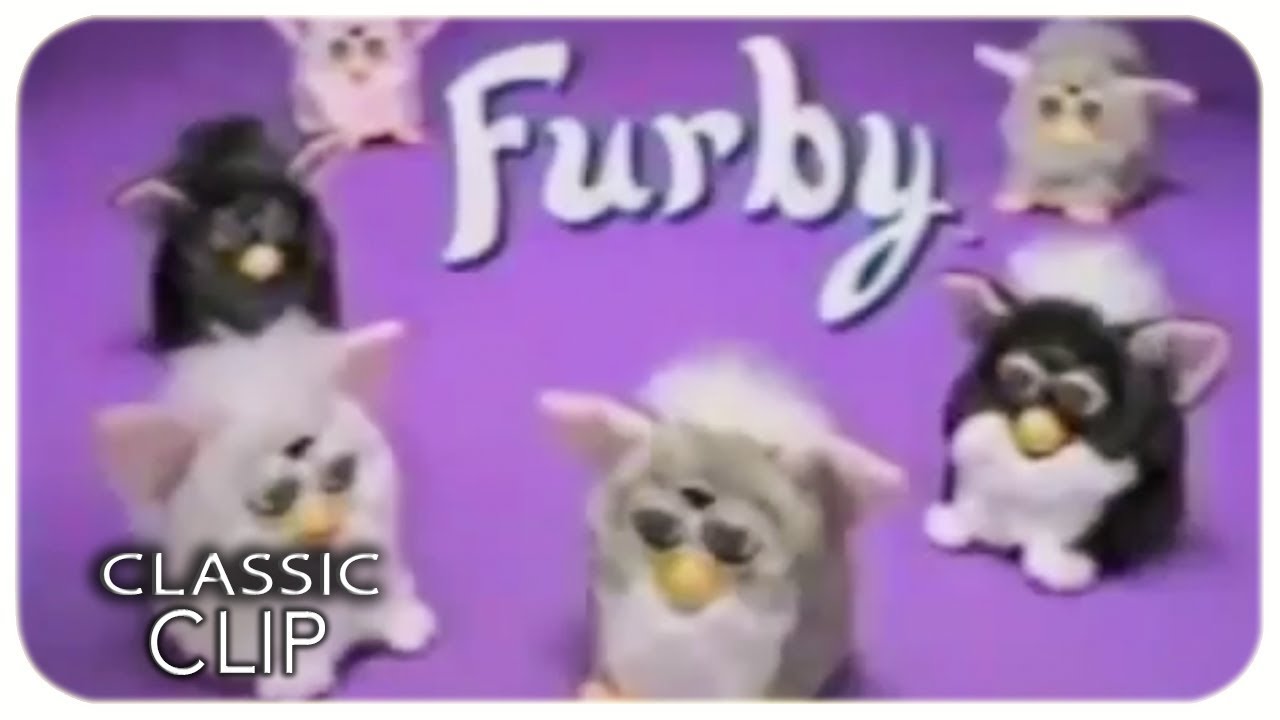
Furby
A furry owl-hamster gremlin that spoke gibberish and slowly "learned" English, making it feel genuinely alive. Tiger Electronics' Furby became the holiday craze of 1998—resale prices hit $100, and the NSA banned it from its offices out of sheer paranoia.