Sister Act

Whoopi Goldberg as a Reno lounge singer hiding from the mob in a San Francisco convent, where she turns a hopeless choir into a gospel-and-oldies act that packs the pews. It made $231 million and was America's top video rental of 1993.
The screenwriter Paul Rudnick pitched Sister Act to the producer Scott Rudin in 1987 with Bette Midler in mind for the lead, but Midler turned it down, worried her fans would not want to see her play a nun. Whoopi Goldberg signed on instead, and during production the script went through half a dozen writers, among them Carrie Fisher, Robert Harling and Nancy Meyers. By the end it resembled his draft so little that Rudnick asked for a pseudonym and was credited as Joseph Howard. Emile Ardolino directed for Touchstone, and it was filmed between September and December 1991, with St. Paul's Catholic Church in Noe Valley, an upper-middle-class San Francisco neighborhood, standing in for the struggling Saint Katherine's, and the storefronts across the street redressed to look run-down.
Goldberg plays Deloris Van Cartier, a lounge singer who sees her married gangster boyfriend, Harvey Keitel's Vince LaRocca, murder an informant and is hidden by the police in a convent as "Sister Mary Clarence." Maggie Smith is the Mother Superior who wants her gone, and Kathy Najimy, Wendy Makkena and Mary Wickes are the nuns who fall in with her. Put in charge of the dismal choir, Deloris starts them on a traditional "Hail Holy Queen" and swings it into gospel and rock and roll, rewrites "My Guy" as "My God," and ends with "I Will Follow Him" for a visiting Pope John Paul II. Makkena's singing voice was Andrea Robinson's, and the soundtrack album, with Marc Shaiman's score, went gold.
It opened on May 29, 1992, and sat at number two for four weeks behind three different blockbusters in succession, Lethal Weapon 3, Patriot Games and Batman Returns, on its way to $139.6 million in the United States and $231.6 million worldwide against a $31 million budget, the eighth-highest-grossing film of 1992 worldwide. Critics were mixed (Roger Ebert gave it two and a half stars and called it a missed opportunity), but audiences gave it an A on CinemaScore, and on VHS it became the top rental of 1993. The sequel, Sister Act 2: Back in the Habit, followed in 1993 to bad reviews. A stage musical premiered at the Pasadena Playhouse in 2006, reached the London Palladium in 2009 with Goldberg among its producers, and ran 561 performances on Broadway from 2011, with five Tony nominations including Best Musical.
Similar items
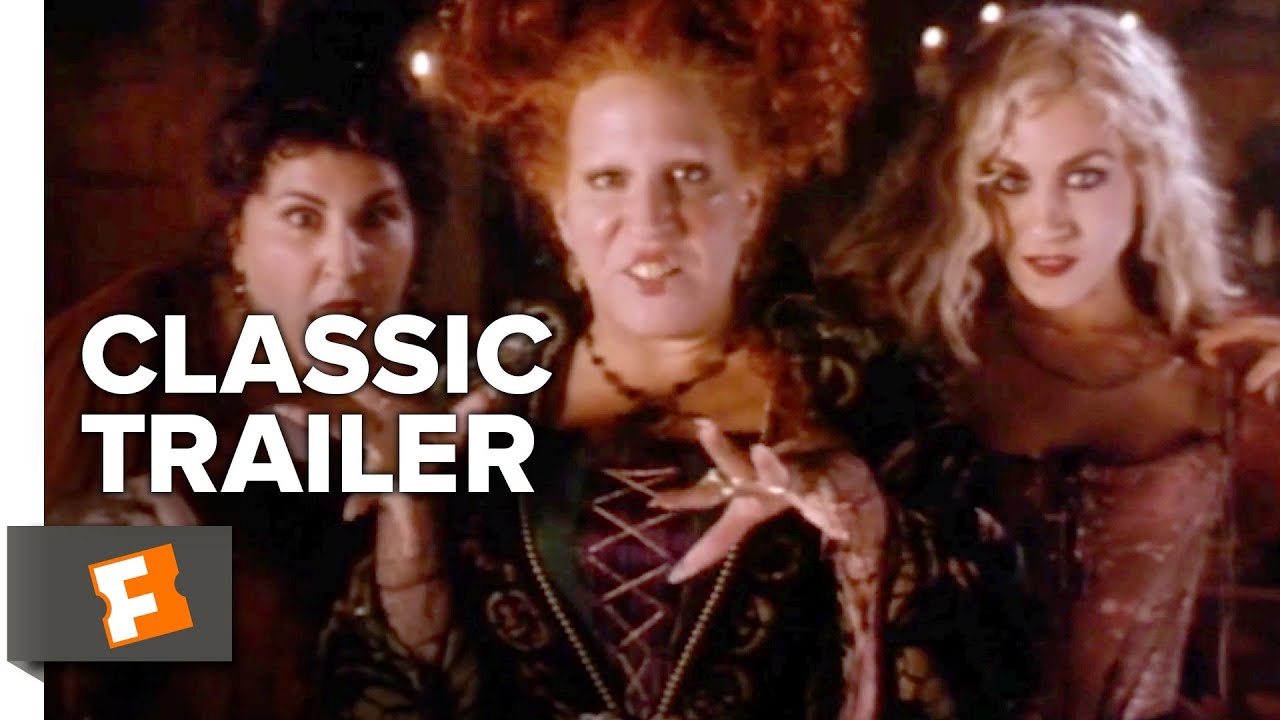
Hocus Pocus
The Sanderson sisters — Bette Midler, Sarah Jessica Parker, and Kathy Najimy — resurrected in Salem on Halloween night, chasing children and belting "I Put a Spell on You." A box-office flop in 1993 that became the ultimate Halloween rewatch tradition.

Mrs. Doubtfire
Robin Williams, four hours in the makeup chair every morning, running through a restaurant quick-change like his life depended on it. The film that proved you could make a comedy about a family falling apart and still have it be genuinely touching—a rare balance the 90s got right, and a comfort object ever since.

The Lion King
The film that taught you to roar and made you cry at a father's death—all before your tenth birthday. Disney's juggernaut — Hamlet with lions — dominated the box office and pop culture like nothing before it, a phenomenon that didn't fade with the VHS but exploded into merchandise, video games, and eventually Broadway's best-grossing production ever.

Romy and Michele's High School Reunion
Two best friends, one Tucson reunion, and the lie that they invented Post-its. Mira Sorvino and Lisa Kudrow in 1997, with a dance number Roger Ebert called "the weirdest choreography I have seen outside a 1960s revival." A modest hit in theaters that became a sleepover classic on tape and cable.