Popular (TV series)

Before Glee and Nip/Tuck, Ryan Murphy's first series put a cheerleader (Leslie Bibb's Brooke McQueen) and a school-paper editor (Carly Pope's Sam McPherson) under one roof when their single parents got engaged. The WB's candy-colored high-school satire ran two seasons from 1999 to 2001, gave the world Mary Cherry, and ended with a car hitting its lead.
Popular was created by Ryan Murphy and Gina Matthews, produced by Touchstone Television, and premiered on The WB on September 29, 1999; it was the show that started Murphy's television career. Brooke McQueen (Leslie Bibb) is the most popular girl at Jacqueline Kennedy High School, a straight-A cheerleader; Sam McPherson (Carly Pope) edits the school paper and runs with the unpopular crowd. When Brooke's father and Sam's mother meet on a cruise and get engaged, the girls end up sharing a house, and their two circles are forced to socialize. On the popular side: quarterback Josh Ford (Bryce Johnson), the scheming cheerleader Nicole Julian (Tammy Lynn Michaels), wannabe-gangster Sugar Daddy (Ron Lester) and Mary Cherry (Leslie Grossman), the rich, unhinged cheerleader whom everyone, including herself, calls by both names, and whose mother Cherry Cherry was played by Delta Burke. On the other side: activist Lily (Tamara Mello), Carmen (Sara Rue), who is turned away from the cheer squad over her weight and later co-captains it, and Harrison (Christopher Gorham), the awkward boy who ends up loved by both leads. Diane Delano played the terrifying science teacher Bobbi Glass, and the guest list included Sandra Oh, Wentworth Miller and Chad Lowe. The opening theme was an excerpt of Kendall Payne's "Supermodels."
The tone was the thing. Amazon's Bret Fetzer described the show merging melodramatic soap stories with "wrenchingly blunt and honest portrayals of the cruelties of adolescence," tackling anorexia, peer manipulation and body image, with Mary Cherry as its running brush with hyper-reality. Murphy later recalled a WB executive telling him a character's fur coat was "code for gay" and that Mary Cherry's dialogue was "too gay and will offend some of our viewers."
Season one ended with Sam tracking down Brooke's long-absent mother, which broke up the parents' engagement; season two had the girls reunite them and slowly become close enough to call each other "family," even as Brooke quit cheerleading and Sam got popular. The second-season finale, aired May 18, 2001, ended with a drunk, furious Nicole running Brooke down with her car. The WB cancelled the show, and the cliffhanger became the series finale. Along the way the cast faced Freaks and Geeks on a February 2000 celebrity week of Family Feud.
Entertainment Weekly put Popular at number 21 on its 2014 list of the best cult TV shows ever and called it "the proto-Glee," a show that "celebrated the value of outcasts" through an absurdist lens. The complete series made it to DVD with some songs swapped for stock music, but as of 2025 it wasn't streaming on Disney+ or Hulu, which is why it lives mostly in memory. Murphy's next series was Nip/Tuck in 2003.
Similar items
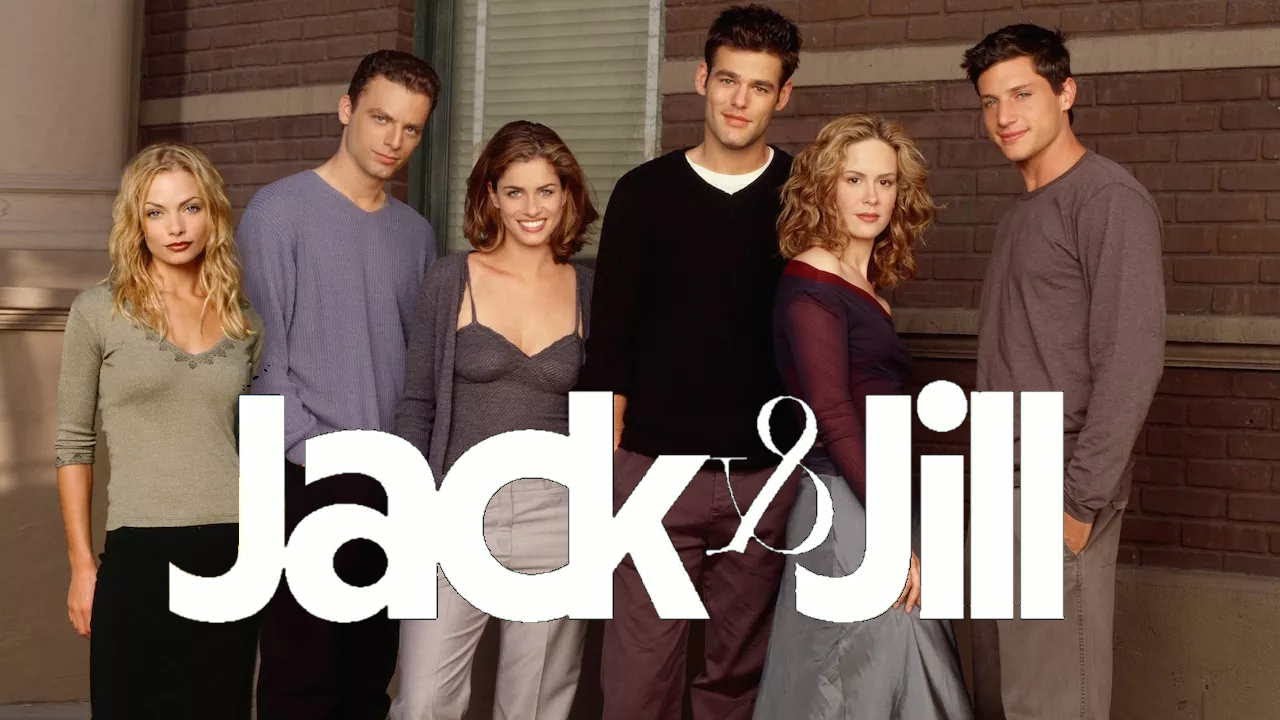
Jack & Jill (TV series)
The WB's fall-1999 New York romance with a name gimmick: she was Jack, Jacqueline Barrett, played by Amanda Peet, and he was Jill, David Jillefsky, played by Ivan Sergei. Two seasons, a pregnancy cliffhanger nobody ever resolved, and a supporting cast (Sarah Paulson, Jaime Pressly, Justin Kirk, Simon Rex) that went on to much bigger things.

Dawson's Creek
The WB teen drama where impossibly articulate teenagers agonized over love and life in the seaside town of Capeside — and where the Dawson-versus-Pacey fight for Joey became one of the defining "who will she choose" debates of the era. Set to Paula Cole's "I Don't Want to Wait."

Roswell
Alien teens hiding in plain sight in a New Mexico high school — sci-fi wrapped in teen romance, set around a kitschy diner where everything came doused in Tabasco. It only ran three seasons, but its fans mounted one of TV's most famous save-our-show campaigns, mailing bottles of hot sauce to the network.

Mean Girls
The teen comedy that defined 2000s school social hierarchies — cliques, calculation, and the crushing realization that you might be the problem. Mean Girls premiered in April 2004, written by SNL's Tina Fey, and immediately became the movie every middle and high school student quoted obsessively for the next decade.