Monsters, Inc.

Your closet door really was a portal to a monster city — and the scariest part was that the monsters were just doing their jobs. Pixar's Monsters, Inc. imagined a metropolis powered by children's screams, then let one giggling toddler named Boo dismantle the whole economy.
Pixar's fourth feature film, Monsters, Inc. was released in the United States on November 2, 2001. Directed by Pete Docter — the first Pixar feature not helmed by John Lasseter — with co-directors Lee Unkrich and David Silverman, the film starred John Goodman as Sulley, Billy Crystal as the wisecracking Mike Wazowski, and Steve Buscemi as the slithering rival Randall. Boo was voiced by an actual toddler, Mary Gibbs, which is why her babble sounds nothing like a script. The premise was ingenious: a monster city powered by the screams of children, harvested by professional "scarers" working a vast vault of doors that open into bedrooms around the world. Then a little girl follows Sulley back through hers.
The film's emotional turn — the discovery that laughter generates far more power than screams — became its moral center. Randy Newman's song "If I Didn't Have You" won him his first Academy Award for Best Original Song after sixteen nominations. On a $115 million budget, the film grossed $579.7 million worldwide.
A prequel, Monsters University, followed on June 21, 2013. But it was the original that pulled off something stranger: it took the oldest childhood fear in the book — the thing in the closet — and turned it into a workplace comedy warm enough that kids started hoping something WAS in there.
Similar items

Toy Story
Pixar's Toy Story was the first fully computer-animated feature film, directed by John Lasseter and starring Tom Hanks and Tim Allen as mismatched toys Woody and Buzz. Released November 1995, it reinvented animation and launched a franchise that still dominates 30 years later.

Lilo & Stitch
A lonely girl named Lilo adopts what she thinks is a small dog in Hawaii — it's actually Experiment 626, an alien on the run — and their chaotic, heartwarming bond redefines what family means. Disney went back to watercolor-painted backgrounds for the first time since the 1940s, Elvis Presley's music soundtracked the tropics, and the core message stuck with a generation: Ohana means family, and family means nobody gets left behind.
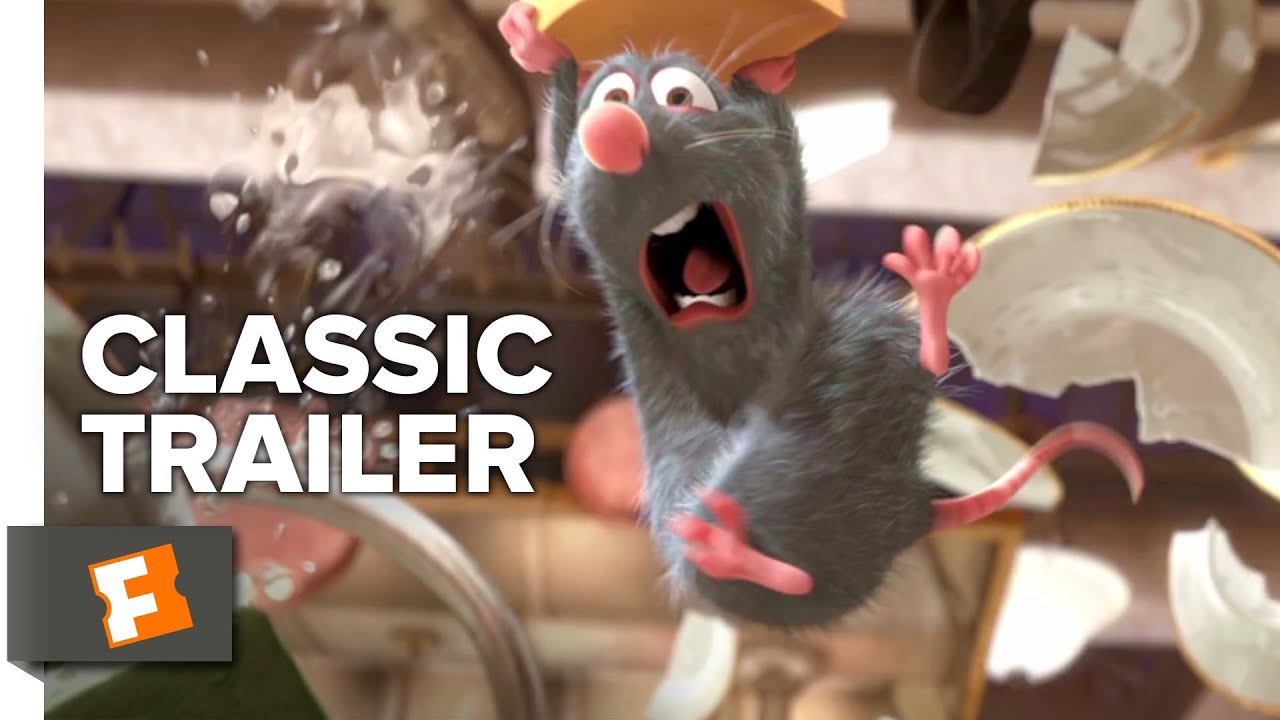
Ratatouille
Pixar's rat-in-a-toque masterpiece: Remy, a rodent with a chef's palate, secretly cooking in a Paris kitchen by puppeteering a hapless garbage boy by the hair. It ends with a single bite of vegetables sending a feared critic hurtling back to his childhood — the most devastating flashback in animation.

The Rugrats Movie
The babies hit the big screen: newborn brother Dil arrives, the Reptar wagon careens into the woods, and the Pickles crew has to find its way home. Nickelodeon's first feature-length animated film, released November 1998, became the first non-Disney animated feature to cross $100 million at the US box office.