Goodfellas

"Funny how? Do I amuse you?" Martin Scorsese's 1990 life of mob associate Henry Hill: the Copacabana tracking shot, Joe Pesci's Oscar, and the fastest two and a half hours in gangster movies. The film that taught a generation how wiseguys talked, and the one that inspired The Sopranos.
Scorsese was not planning another Mafia picture. In 1986, while making The Color of Money, he read a review of Wiseguy, crime reporter Nicholas Pileggi's book about Lucchese-family associate Henry Hill, and decided it was the most honest portrait of gangsters he had ever read. He cold-called the author. "I've been waiting for this book my entire life," Scorsese said; "I've been waiting for this phone call my entire life," Pileggi answered. The film waited while Scorsese made The Last Temptation of Christ, then the two of them wrote twelve drafts, assembling pieces of the book like building blocks instead of following a conventional plot. Scorsese wanted it "to begin like a gunshot and have it get faster from there, almost like a two-and-a-half-hour trailer."
Warner Bros. wanted a star as Hill; Ray Liotta, who campaigned hard for the part, later joked that the studio "would've rather had Eddie Murphy than me." He got it after Robert De Niro saw him in Something Wild, and once De Niro agreed to play Jimmy Conway the money came together. De Niro phoned the real Hill several times a day to ask how Jimmy Burke walked and held his cigarette. Scorsese shot around Queens, Long Island and New Jersey in 1989 for $25 million, recording rehearsals, transcribing the improvisations and writing the best lines into the script. The "Funny how?" scene came from a night when a young Joe Pesci, working as a waiter, told a mobster he was funny and watched it land badly. And the Copacabana shot, roughly two and a half unbroken minutes in through the back of the club, existed because the crew could not get permission to go in the short way. It took eight takes, because Henny Youngman kept blowing his lines.
Test audiences struggled: at the first preview, forty people walked out in the first ten minutes, rattled by Henry's coked-up last day as a wiseguy, which was exactly the effect Scorsese and editor Thelma Schoonmaker wanted. Goodfellas opened at number one in September 1990, grossed about $47 million, and earned six Academy Award nominations, with Pesci winning Best Supporting Actor. Roger Ebert wrote that "no finer film has ever been made about organized crime – not even The Godfather," and he and Gene Siskel both named it the best film of 1990.
The afterlife is the point. The Copa shot is credited with popularizing the long Steadicam take in Pulp Fiction, Boogie Nights and beyond; David Chase has called Goodfellas "a very important movie to me" and the inspiration for The Sopranos, and the two share 27 actors, including Lorraine Bracco and Michael Imperioli. The Library of Congress added it to the National Film Registry in 2000. Henry Hill, whose testimony produced fifty convictions, was thrown out of witness protection in 1987 and died in 2012, the day after his 69th birthday.
Similar items

The Sopranos
Tony Soprano walks into a psychiatrist's office with panic attacks—and changed television forever. HBO's landmark 1999 drama paired mob violence with suburban therapy, making prestige TV a thing.
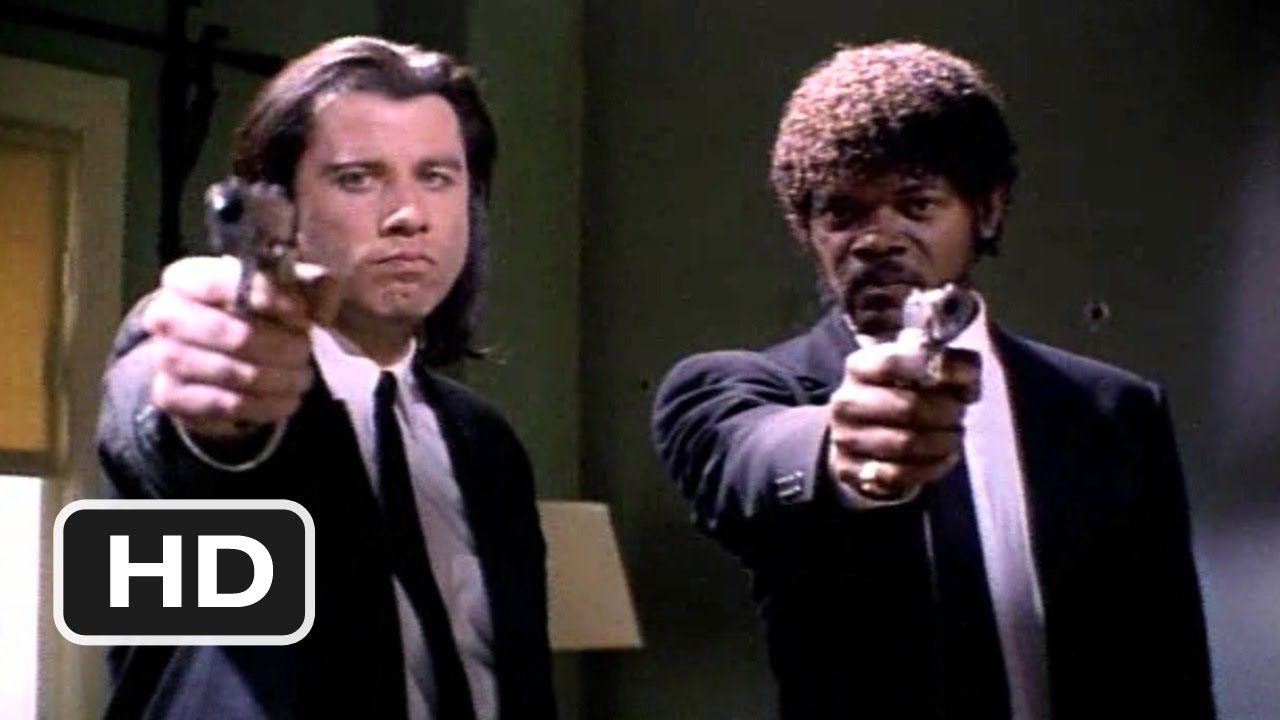
Pulp Fiction
Quentin Tarantino's nonlinear crime epic rewrote the rules of what indie films could be. Released October 1994 with a Palme d'Or win at Cannes, a $200 million global gross, and career resurrections for John Travolta and a breakthrough for Samuel L. Jackson, Pulp Fiction became the defining film of a generation hungry for something different.

Home Alone
Kevin McCallister is accidentally left behind when his family flies out for the holidays — and when two bumbling burglars invade, the eight-year-old's creative defenses (ice, tar, paint cans, and a very hot doorknob) turn the house into a gauntlet of booby traps. It became the defining Christmas movie of a generation, making Macaulay Culkin the most famous kid on the planet.

A Little Princess
"All girls are princesses." Alfonso Cuarón's 1995 version of the Burnett classic moved Sara Crewe to a New York boarding school in wartime, lost money in theaters, and then sold two million tapes. The attic, the locket, Miss Minchin: a sleeper that became a childhood staple on video.