Fight Club

David Fincher's anti-consumerist fever dream — Edward Norton's insomniac narrator, Brad Pitt's Tyler Durden, and a basement club with rules you weren't supposed to talk about. It bombed with critics split down the middle and underwhelmed in theaters, then the DVD turned it into the defining cult movie of its generation.
Fight Club opened October 15, 1999, David Fincher directing an adaptation of Chuck Palahniuk's novel: Edward Norton as an unnamed, insomniac office drone, Brad Pitt as the charismatic soap-maker Tyler Durden, and Helena Bonham Carter as Marla Singer. Made for around $63 million, it split critics violently — some hailed it as one of the year's most original films, others called it irresponsible and appalling — and it underperformed in North America, opening to about $11 million and finishing with roughly $37 million domestically against a worldwide gross of only $102 million. Twentieth Century Fox treated it as a costly misfire.
Then home video happened. Fight Club became one of the movies that proved the DVD era could resurrect a film left for dead — it sold more than six million discs within a decade and pulled in over $55 million in video and DVD rentals, passing hand to hand through dorm rooms and late-night arguments. The first two rules of Fight Club became one of the most quoted lines of the era, Tyler Durden ended up on a million posters, and by 2009 The New York Times was calling it "the defining cult movie of our time."
Its reputation has stayed complicated — endlessly quoted, endlessly misread, argued over by people who take Tyler Durden as a hero and people who insist the film is mocking exactly that impulse. That argument is a big part of why it never faded. Few 1999 flops have aged into something this permanently discussed.
Similar items
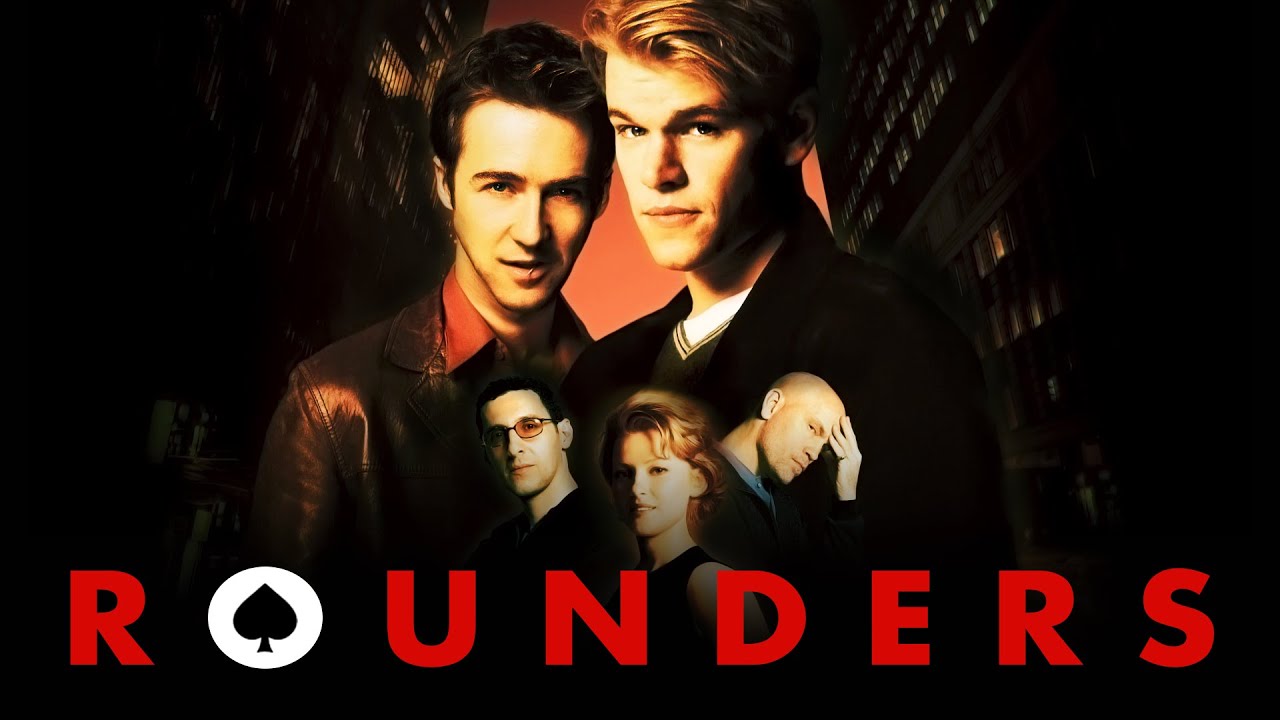
Rounders
Matt Damon as a reformed card shark pulled back to the table, Edward Norton as the friend who keeps dragging him there, and John Malkovich chewing Oreos as a Russian mobster named Teddy KGB. A modest 1998 release that a generation of poker players later adopted as their sacred text.
Ocean's Eleven
Eleven thieves, three casinos, $160 million in one underground vault. Steven Soderbergh's 2001 remake of the Rat Pack classic put George Clooney, Brad Pitt, Matt Damon, and Julia Roberts in the coolest movie of the decade — a heist so smooth it made crime look like a hangout.

Brad Pitt
The reigning heartthrob of the 1990s — the drifter who stole Thelma & Louise, the golden boy of Legends of the Fall, the detective screaming "what's in the box?", and finally Tyler Durden. No face was taped inside more mid-90s lockers.