Fastball
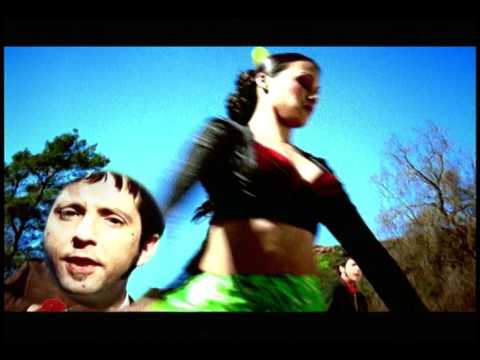
Austin trio Fastball broke through in 1998 with 'The Way,' a song that transformed a real couple's tragic road trip into an anthem of eternal possibility. Written by Tony Scalzo after reading about the true story of Lela and Raymond Howard, the track spent seven weeks at #1 on Billboard's Modern Rock Tracks and earned two Grammy nominations. It was the band's commercial peak—a moment of mainstream success they'd never replicate.
Fastball formed in Austin, Texas, in 1992, initially performing under the name Magneto U.S.A. The trio—Tony Scalzo on vocals and bass, Miles Zuniga on vocals and guitar, and Joey Shuffield on drums—built a following in the Austin music scene before signing with Hollywood Records and taking the name Fastball.
Their second album, "All the Pain Money Can Buy," released in 1998, went platinum within six months, an impressive achievement for an alternative rock band establishing themselves. But the album's true impact came from a single born from one of the decade's most unusual inspirations.
Tony Scalzo had read news reports about Lela and Raymond Howard, an elderly couple from Salado, Texas. In June 1997, despite her Alzheimer's disease and his recent recovery from brain surgery, they set out to drive to a Pioneer Day festival in nearby Temple. Two weeks later, they were found dead in their car at the bottom of a ravine near Hot Springs, Arkansas—hundreds of miles off course. Scalzo's song "The Way" took this tragedy and transformed it: where others might see a cautionary tale, he reimagined an eternal road trip of young love—a couple who chose the open road. The chorus's central question—Where were they going without ever knowing the way?—became an anthem of boundless possibility. Released in January 1998, the song spent seven weeks at #1 on Billboard's Modern Rock Tracks and hit #1 in Canada. The follow-up single, "Out of My Head," reached the top ten on the Billboard Top 40, and “The Way” earned two Grammy nominations.
The success, however, proved singular. Fastball never again achieved those commercial heights, though their moment was cemented when VH1 later ranked "The Way" at #94 on its list of the 100 Greatest Songs of the '90s.
Unlike many one-hit-wonder bands, Fastball didn't disappear. The trio continued to record and tour, a living reminder that while lightning rarely strikes twice, sometimes the simple act of persisting is its own form of victory.
Similar items
![Video thumbnail — Third Eye Blind - Semi-Charmed Life (Official Music Video) [HD]](https://i.ytimg.com/vi/beINamVRGy4/maxresdefault.jpg)
Third Eye Blind — "Semi-Charmed Life"
"Doo doo doo, doo doo-doo doo..." — the sunniest-sounding smash of 1997 was a song about crystal meth, and the radio edit made sure you couldn't tell. The hook that soundtracked every summer barbecue was hiding one of the darkest lyrics on the dial.

The Verve Pipe — "The Freshmen"
"For the life of me, I cannot remember..." — the guilt-stricken confession ballad that all of 1997 alt-radio screamed along to without quite knowing what it was confessing. Rooted in something real, mostly made up, and somehow everyone's story at once. (The Verve Pipe, from Michigan — no relation to The Verve of "Bitter Sweet Symphony" fame, same year, different ocean.)

311
The Omaha band that fused alt-rock, reggae, funk, and rap into a laid-back sound built for summer. Their 1995 self-titled "Blue Album" broke them nationwide on the strength of "Down" and "All Mixed Up," and their two-vocalist lineup has stayed intact for decades.

Weezer
The Los Angeles band that made being a nerd sound like the coolest thing in the world. The 1994 "Blue Album" and its Spike Jonze videos — the Happy Days-themed "Buddy Holly" chief among them — turned Rivers Cuomo's sweater-clad geek-rock into a generational touchstone.