Deal or No Deal
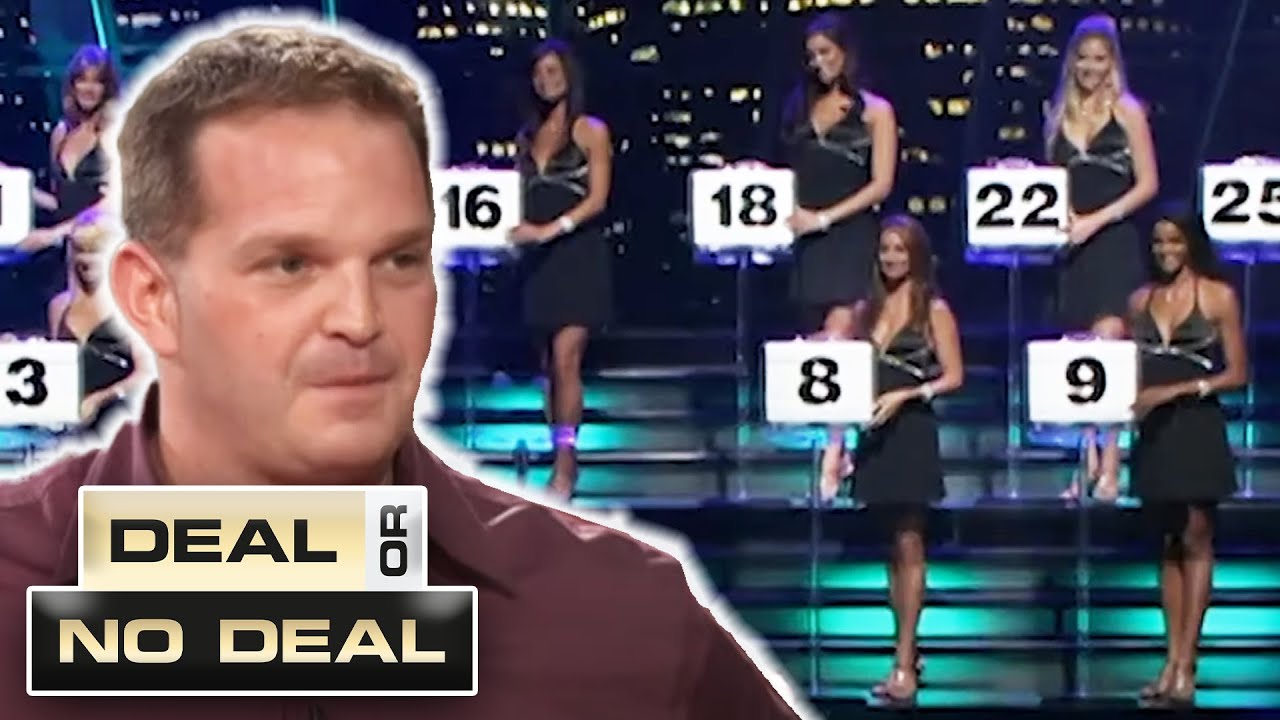
Twenty-six briefcases, a wall of identically dressed models, a shadowy Banker on the phone, and Howie Mandel asking the only question that mattered. No trivia, no skill — just a fist bump, a gut feeling, and America yelling "NO DEAL!" at the television.
Deal or No Deal premiered on NBC on December 19, 2005, with Howie Mandel hosting an American version of Miljoenenjacht, the Dutch hit from format factory Endemol. The game needed no rulebook: a contestant claims one of 26 sealed briefcases holding amounts from a penny to $1,000,000, then opens the others one by one while the unseen Banker phones down offers to buy them out. Take the money — "deal" — or keep opening cases and pray.
It was an immediate sensation, typically averaging 10 to 16 million viewers an episode in its first season, with the June 2006 season finale drawing over 18 million. The wall of identically dressed briefcase models became a signature of its own — case number 24 was held for a stretch by a then-unknown Meghan Markle — and Mandel's signature fist bump crossed over into the culture at large.
For all the hysteria, the million stayed locked up for years: no one won the top prize until 2008, when Jessica Robinson turned down a $561,000 buyout, opened her case, and found the $1,000,000 inside. By then the format was everywhere — a daily syndicated half-hour version launched in September 2008 with a $500,000 top prize — and the primetime original wound down on May 18, 2009, with a brief CNBC-era revival following in 2018.
It remains the purest distillation of the 2000s game-show boom: a show about nothing but nerve, luck, and how much your family in the front row can scream.
Similar items

Who Wants to Be a Millionaire
"Is that your final answer?" For a couple of years around the millennium, Regis Philbin, a tiered ladder to a million dollars, three lifelines, and a set that dimmed to a heartbeat pulse made this the biggest show on television — running multiple nights a week and minting the country's first game-show millionaires.

Are You Smarter Than a 5th Grader?
Jeff Foxworthy watching grown adults discover they cannot pass elementary school. Ten questions pulled from grade-school textbooks, a panel of actual fifth graders to lean on, and the walk of shame where you faced the camera and confessed: "I am not smarter than a 5th grader."
Fear Factor
Six strangers, three progressively insane stunts, $50,000 on the line. Fear Factor turned watching people eat bugs and face their worst nightmares into appointment television, and Joe Rogan's deadpan 'Evidently, fear is not a factor for you' became the phrase you repeated at anyone who hesitated at anything.

ER
Michael Crichton's high-velocity emergency-room drama gave network television permission to be dense, technical, and chaotic. Gurneys crashing, doctors walking and talking through hallways, trauma in real time — it changed what television drama could do.