Cool Spot

The red dot from the 7 Up logo, in sunglasses, flicking soda bubbles at whatever crawled toward him. It should have been a cereal-box throwaway. Instead David Perry's team made one of the best-looking platformers on the Genesis, and it sold about a million copies.
The early 1990s were the era of the mascot game, when Chester Cheetah and Domino's Noid got their own cartridges, and the 7 Up Spot was the one that turned out to be good. Cool Spot came out of Virgin Games' American studio in April 1993 on the Sega Genesis, with a Super NES version and ports to the Master System, Game Gear, Game Boy, Amiga and DOS following. Programmer David Perry had just come off Global Gladiators, a McDonald's-licensed game that Virgin's Stephen Clarke-Willson later called the practice run for this one, and the Cool Spot team was tiny: eight people, including animators Mike Dietz and Shawn McLean, designers David Bishop and Bill Anderson, producer Cathie Bartz-Todd and composer Tommy Tallarico. Perry has said the coding took about three months and the whole job about half a year.
The game itself was simple and unusually pretty. Spot jumped, clung to things and threw soda bubbles in any direction, and each level asked him to collect a quota of little red spots before he could free a caged fellow Spot at the end. His health meter was his own face, slumping further forward with every hit. The bonus stage hid letters that spelled UNCOLA, 7 Up's slogan, and each one bought a continue. The animation, the backgrounds and Tallarico's soundtrack were what people remembered; British magazines put it on best-of lists for years afterward, and Complex was still ranking it among the best SNES games in 2018.
For Virgin the deal was the point. "Spot was the greatest deal ever," Stephen Clarke-Willson, the company's vice president of product development, said later. "For something like $.25 a unit, we got access to $10 million in advertising by Seven-Up at Christmas time." The game sold about a million copies, Perry's team went straight on to the Genesis Aladdin, and a sequel, Spot Goes to Hollywood, arrived in 1995. For everyone else it was a moment when a soda commercial was, briefly, one of the best games in the house.
Similar items

Sega Genesis
Sega's 16-bit home console arrived in 1989 and dominated the early 90s with its attitude, speed, and Sonic the Hedgehog. The Genesis ('Mega Drive' everywhere else) promised 'Blast Processing' and delivered games that felt faster and edgier than what Nintendo offered, winning hearts — and quarters — across a generation.
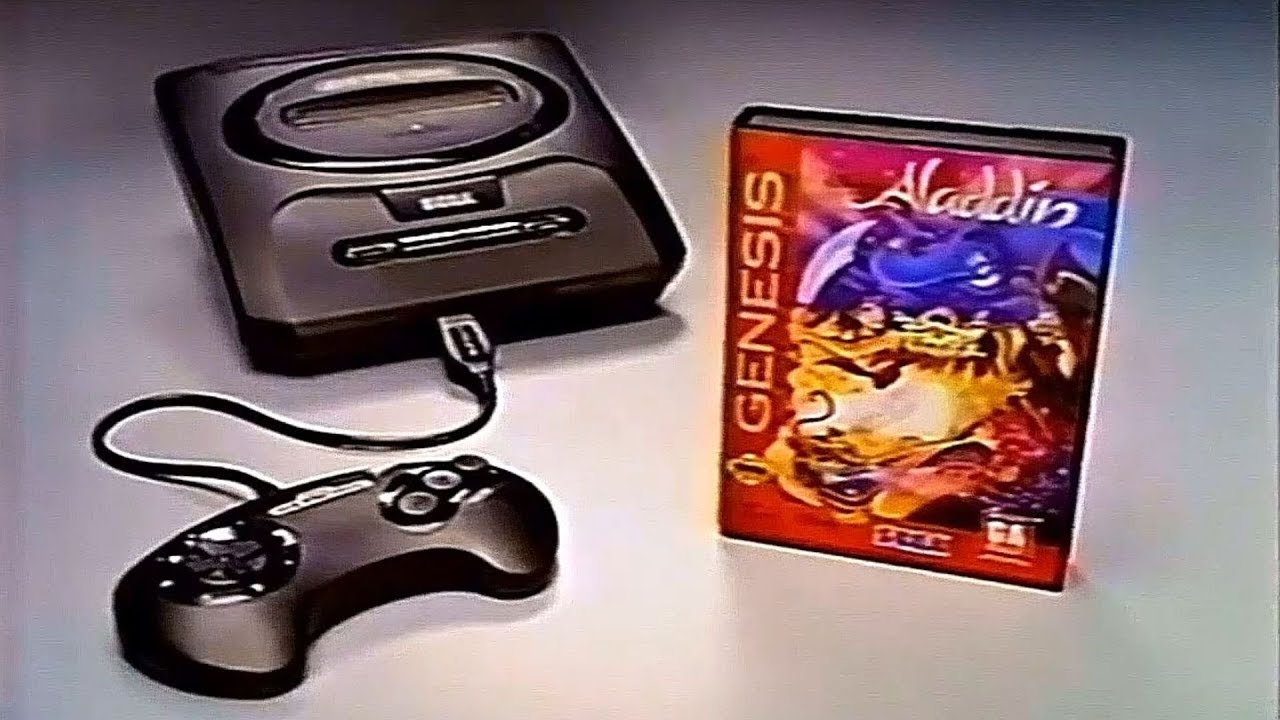
Disney's Aladdin (Genesis)
Virgin Games didn't just make a movie tie-in — they got actual Disney animators to draw the game, so Aladdin ran, leapt, and sword-swung across your Genesis with real film-grade animation. Four million copies later, it was one of the best-selling Genesis games ever, and one half of an eternal playground debate with the totally different SNES version.

Earthworm Jim
An ordinary earthworm in a robotic super-suit, here to save the world with run-and-gun style and pure, unapologetic weirdness. Earthworm Jim arrived in October 1994 as a 16-bit fever dream — fluid animation and gross-out humor that felt almost illegal on a Genesis. It was goofy, it was gross, and your parents didn't get it. That was the whole point.

Super Nintendo (SNES)
Nintendo's 16-bit powerhouse that dominated the early 1990s and fought the Sega Genesis for console supremacy. Launched in North America at $199 in August 1991, it came packed with Super Mario World and helped define a generation of gaming with over 49 million units sold worldwide.