The 1998 Home Run Chase

All summer, McGwire and Sosa traded home runs while the whole country checked the tally on the nightly news. The 1998 chase for Roger Maris's record turned baseball back into must-see TV—and its record book now reads very differently.
The target was Roger Maris's single-season record of 61 home runs, set in 1961 and untouched for 37 years. In 1998 that record suddenly felt breakable. Mark McGwire of the St. Louis Cardinals and Sammy Sosa of the Chicago Cubs spent all summer trading homers, and nightly sportscasts showed the tally like a national countdown. Ken Griffey Jr. ran with them early in the season, finishing with 56 and tying his own previous high, but by late summer the race had narrowed to McGwire and Sosa.
On September 8, 1998, Mark McGwire connected off Steve Trachsel of the Cubs—a 341-foot line drive that cleared the left-field wall at Busch Stadium. Home run number 62. Roger Maris's family was in the stands. And because the Cubs were the opponent that night, Sammy Sosa was right there to congratulate him personally on the field. Groundskeeper Tim Forneris recovered the historic ball and returned it on the field. McGwire's record climb continued: he finished the season with 70 home runs. Sosa tied him briefly at 62 after hitting four home runs in three games against Milwaukee, then finished with 66.
The race had done something no statistic could measure: it restored faith in baseball after the 1994–95 players' strike had fractured the sport's relationship with its fans. The 1997 and 1998 record chases are widely credited by sports analysts with bringing America back to the box score, the radio broadcast, the argument with coworkers about who was better.
But the record came with an asterisk that would outlast the moment. In the middle of that same 1998 season, AP writer Steve Wilstein reported on the bottle of androstenedione in McGwire's locker—a supplement not prohibited by MLB at the time and not federally classified as an anabolic steroid until 2004. Barry Bonds would eventually hit 73 home runs in 2001. And on January 11, 2010, McGwire finally admitted he had used steroids throughout his career, including in 1998—"I wish I had never touched steroids. It was foolish and it was a mistake," he said in his statement, before facing Bob Costas on MLB Network that night. The summer still happened—the flipped caps, the Sosa hop, the country checking box scores again—but the record book reads differently now.
Keep talking about it (Reddit)
Similar items

Michael Jordan
The Bulls dynasty alpha who made basketball bigger than basketball itself. Six NBA championships in two three-peats, a Gatorade slogan that became a religion, a baseball detour ended by a two-word press release, and Air Jordans that outlasted his career by decades.
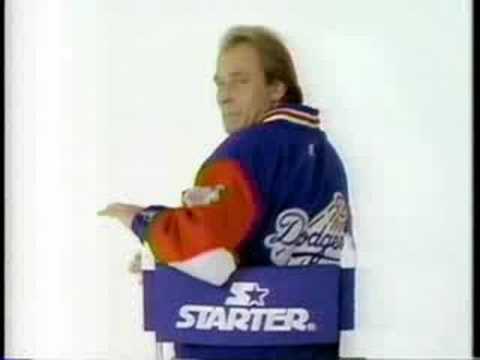
Starter Jackets
Starter's nylon and satin team jackets were the uniform of 90s cool — oversized windbreakers emblazoned with NBA and NFL team logos that transformed playground basketball courts and city streets into stadiums of style. Starter jackets became so coveted they sparked robberies, making them perhaps the decade's most dangerous fashion statement.
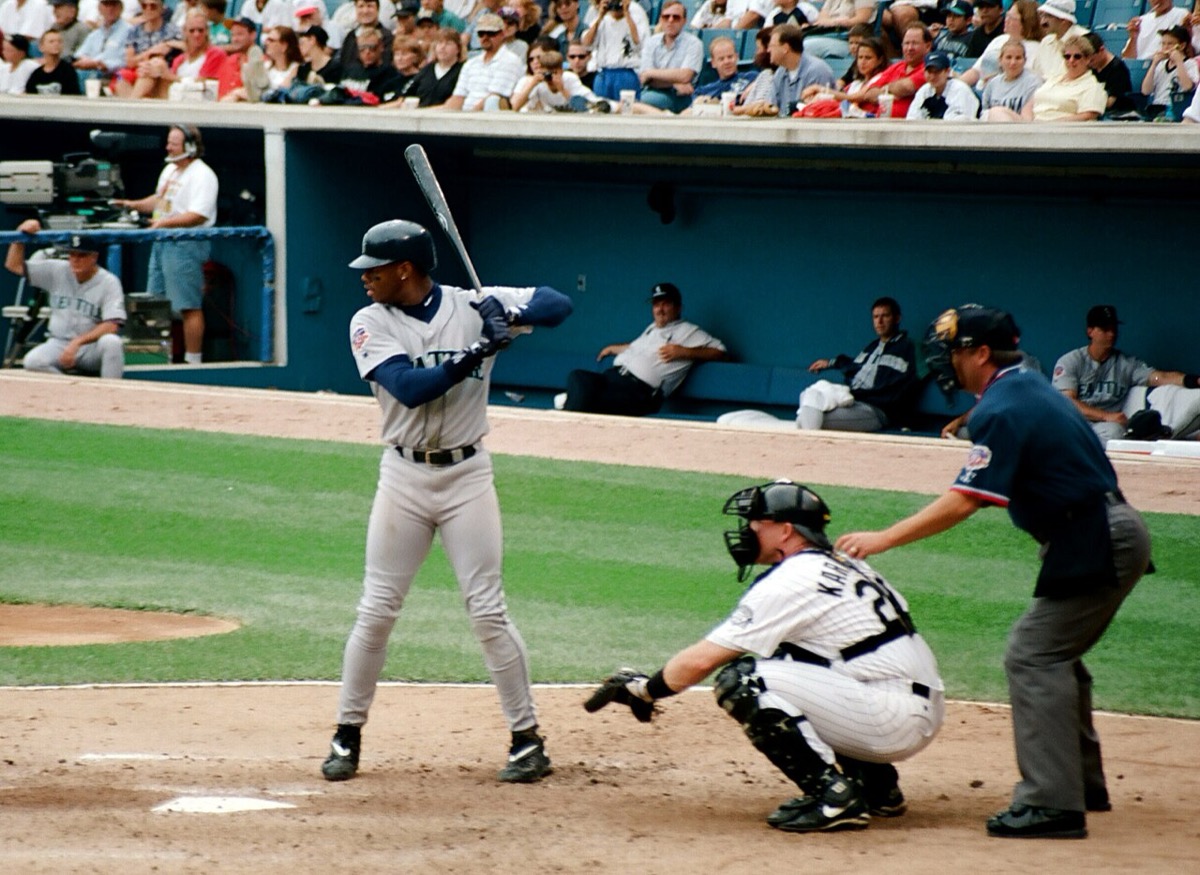
Ken Griffey Jr.
The Kid — the backwards cap, the sweetest left-handed swing in baseball, and the Seattle Mariners star who was the face of the 90s game. Ken Griffey Jr. hit towering home runs, made highlight-reel catches, and had his name on the video games kids played and the Wheaties boxes on the breakfast table.

Baseball Card Collecting
Every kid's shoebox of commons was going to pay for college. Junk-wax-era baseball cards — Topps, Fleer, Donruss, Score, Upper Deck — were printed by the billions while Beckett price guides promised the binder was a portfolio.